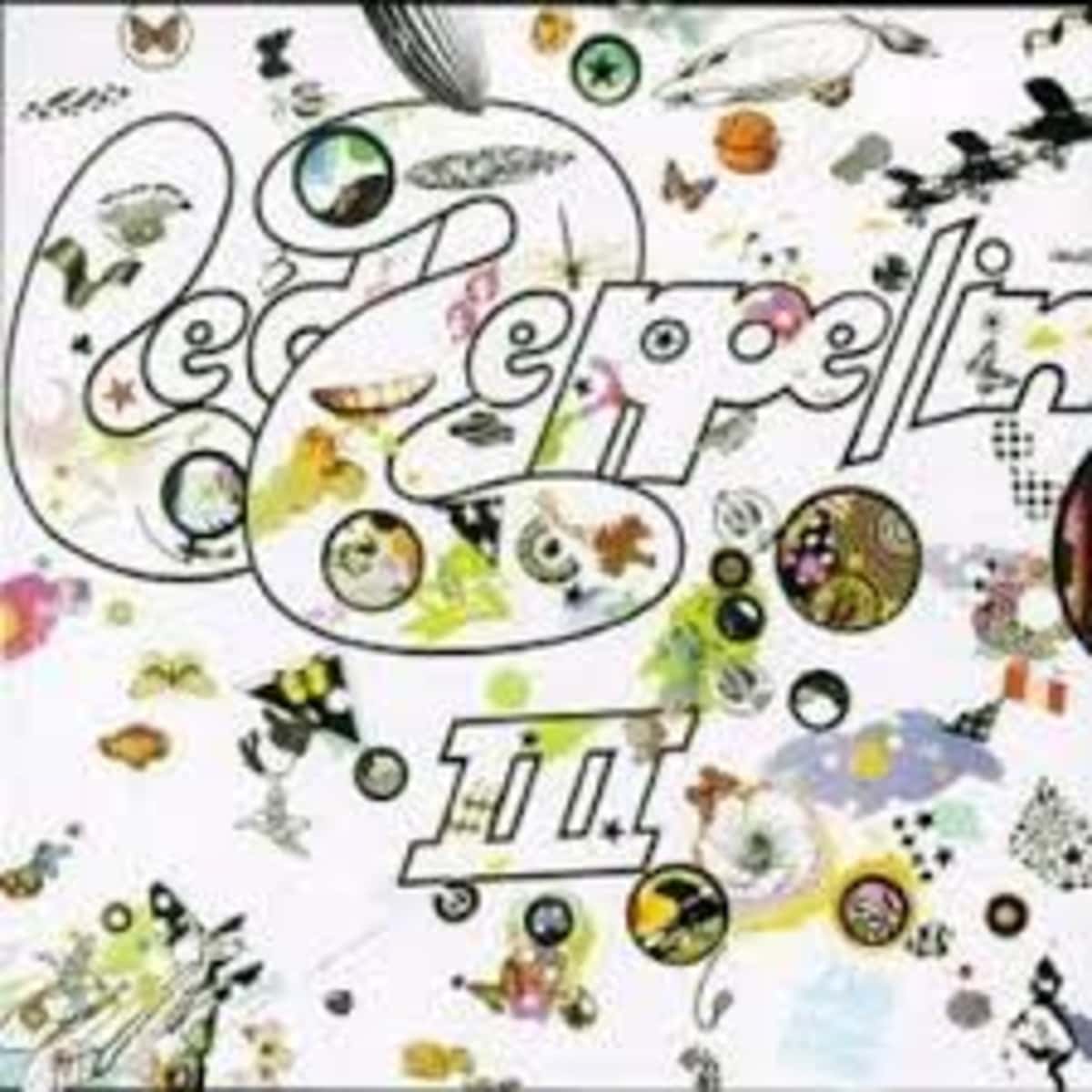
My favorite early Led Zeppelin albums are neither I nor II; they feel like the logical endpoint of the Yardbirds’ “white boys” blues era, a dazzling but borrowed fire. For me, the first truly astonishing Zeppelin records are III and IV—the moment when the imitation finally collapses and something darker, more self‑invented steps through. I prefer them when they stop trying to be the best blues band in London and start acting like the architects of their own mythos—why settle for a loud imitation when you can create a haunting original?
From borrowed blues to dark Romanticism with III and IV, the duality I often seek in my own work finally begins to manifest. They move away from the strictly derivative and step into the ethereal and the occult. Led Zeppelin I and II are thrilling, but they are also the natural conclusion of the Yardbirds’ Beck‑and‑Page era: white British musicians electrifying Black American blues, turning Willie Dixon’s spectral presence into a kind of borrowed swagger. Those records are about the power of the blues as performance; III and IV are about the horror and beauty found inside it.
Led Zeppelin III (1970) is where their dark romanticism takes root, and it begins, fittingly, with a retreat. By decamping to Bron‑Yr‑Aur, a remote Welsh cottage far from the circuits of London and Los Angeles, they traded the city’s artifice for something pastoral and haunted. The songs that emerge from that space carry its quiet: acoustic textures, jarring tonal shifts, a willingness to sit in vulnerability rather than just volume. Critics at the time heard this as an oddly “soft” record, but from this distance it reads as their first serious attempt to match, rather than merely mimic, the emotional weight of the blues and folk that formed them.
The Shift to the Substantial: Led Zeppelin III
Led Zeppelin III is where the band’s relationship to the blues turns confessional. Tracks like “Friends” and “Since I’ve Been Loving You” offer a textual density and emotional honesty that II simply doesn’t attempt. The record feels acoustic, jarring, and deeply experimental, as if the band is testing how far they can stretch their influences without snapping them outright. The transition in III is where the “white boy” imitation of the blues finally collapses under the weight of a far more sinister, textually dense ambition. While the first two albums were a performance, III sounds like the moment the mask slips.If the early records were about amplifying the blues, III begins to ask what happens when you move inside it. It is the difference between standing onstage in borrowed bravado and sitting alone in a cottage, listening to what remains when the crowd disappears. From that quiet, a new duality arises: city and countryside, electric and acoustic, swagger and shame.“
“Since I’ve Been Loving You” is the fulcrum of this transition. On paper, it is still a blues, but it feels less like a performance and more like a confession. The Willie Dixon‑era influence is still visible, but it has been mutated. It is no longer a rhythmic tribute or a simple homage; it is a dark romantic psychodrama.Plant’s vocal delivery here isn’t just singing; it’s a sequence of shock‑value crescendos. He stretches the meter of the blues until it frays, dragging phrases over the bar lines, refusing to resolve where the form expects him to. The lyric itself, with its weary catalog of working, pleading, and unraveling, abandons the cocky innuendo of earlier tracks for something closer to desperation. It moves away from the “rock god” artifice and into the vulnerable, shadow‑filled spaces that run from the Delta to the abyss.
Page’s guitar work on this track provides the perfect duality—a sonic dyad at the heart of the song. His playing is simultaneously cold and clinical in its precision, almost surgical in the way it carves out the phrases, yet it bleeds with a raw, visceral agony. Technical mastery is put in service of dramatizing a total loss of control. Every bend sounds like something tearing; every flurry of notes feels like an attempt to articulate what language refuses to hold.Underneath them, the rhythm section turns the song into a kind of chamber blues. John Paul Jones’s organ swells like a guilty conscience, while the drums lurch and drag just enough to make the floor feel unstable. Unlike the strutting bravado of “Whole Lotta Love,” this track is a study in exhaustion and panic. If the first two albums are about the power of the blues, “Since I’ve Been Loving You” reveals the horror and beauty embedded within it.
IV and the occult myth‑machine.
If III is the confession, IV is the conjuring. This is the definitive dyad—the balance of the heavy and the light, the electric city and the haunted countryside, the body and whatever might be left of the soul. Where III retreats to Bron‑Yr‑Aur, IV steps into the public square veiled in mystery. The band removes its own name from the record and replaces it with four non deciphered symbols, as if the music were a spell that no longer requires authorship. It is not just an album; it is an object of ritual.
From the visceral shock of “Black Dog” to the layered, hyper‑metric progression of “The Battle of Evermore,” the record feels less like a blues tribute and more like a series of invocations. “The Battle of Evermore” in particular abandons the nightclub for the hillside, trading the language of the juke joint for that of pastoral myth and apocalyptic vision. It sounds like a folk song possessed by something older and less human.“Stairway to Heaven” completes this turn. It moves with the pacing of a spell: quiet, incremental, deceptively simple in its opening verses before slowly accumulating weight and speed. By the time it reaches its final section, the band is no longer simply playing a song; it is enacting a climb, a test, an exposure.
The occult rumors, the backmasking conspiracies, the endless debates about meaning—these are the cultural aftershocks of a band that has finally learned to write in symbols instead of riffs.The artwork and packaging only confirm this shift. The Hermit, lantern held high on a craggy outcrop, looks less like a standard rock‑album figure than a Tarot card. The four symbols etched into the inner sleeve might as well be sigils: they turn each member into a character in an unnamed ritual. By this point, the band has paid the alchemist’s debt and stands exposed. They are no longer echoes of a master’s pen; they have become responsible for whatever they have summoned.
The Alchemist’s Debt
The ghost of Dixon paced the London stage,
A borrowed rhythm bought with stolen breath;
The boyish hands of Beck and youthful Page,
Were flirting with a soul they’d not met yet.
But Bron‑Yr‑Aur has shadows long and deep,
Where acoustic strings invite the ancient cold;
The city’s artifice has gone to sleep,
And visceral truths begin to take their hold.
From Delta mud to the abyssal height,
The hyper‑metric scream begins to fray;
A heavy dark, a piercing, jagged light,
The sonic dyad leads the mind astray.
The four‑fold signs are carved in silent stone,
No longer echoes of a master’s pen;
The architects are standing all alone,
To conjure myths that will not come again.